Dental sealants are a thin plastic coating painted onto the chewing surfaces of the back teeth, primarily the molars and premolars. These surfaces have deep grooves and pits that are difficult to clean properly with a toothbrush, making them prime spots for bacteria to settle and cavities to form.
A sealant fills in those grooves and creates a smooth surface that's much easier to keep clean. Think of it as a shield between your tooth and everything that causes decay.
Sealants are most commonly applied to children's permanent molars as soon as they come in, but they're equally effective for adults who haven't had fillings or decay in those teeth. If you're looking to prevent future dental work, sealants are one of the smartest investments you can make.
The process is straightforward and completely painless. No drilling, no anesthetic, no recovery time.
1. Cleaning the tooth. The tooth is cleaned thoroughly and dried.
2. Preparing the surface. A mildly acidic solution is applied to the chewing surface for a few seconds to roughen it slightly, which helps the sealant bond properly. The tooth is then rinsed and dried again.
3. Applying the sealant. The sealant is painted directly onto the tooth surface, flowing into the grooves and pits.
4. Hardening. A curing light is used to harden the sealant in place. The whole process takes only a few minutes per tooth.
That's it. You can eat and drink normally right after your appointment.
Sealants are a good option for a wide range of patients:
Adults with no existing fillings or decay in their back teeth. If those surfaces are still healthy, a sealant keeps them that way.
Patients who are cavity-prone. Some people's teeth have deeper grooves than others, making them harder to clean and more susceptible to decay. Sealants eliminate that vulnerability.
Patients who want to reduce future dental costs. Preventing a cavity is always less expensive than treating one. A sealant applied today can protect a tooth for up to 10 years.
At your routine exam, Dr. Hinman will let you know if sealants are a good fit for your teeth.
With proper care, dental sealants can last up to 10 years. Dr. Hinman checks the condition of your sealants at every routine exam and can reapply them if they show signs of chipping or wear.
To get the most out of your sealants, avoid chewing on hard objects like ice or pens, and maintain your regular dental cleaning schedule. A sealant that's been in place for years is still doing its job as long as it's intact.
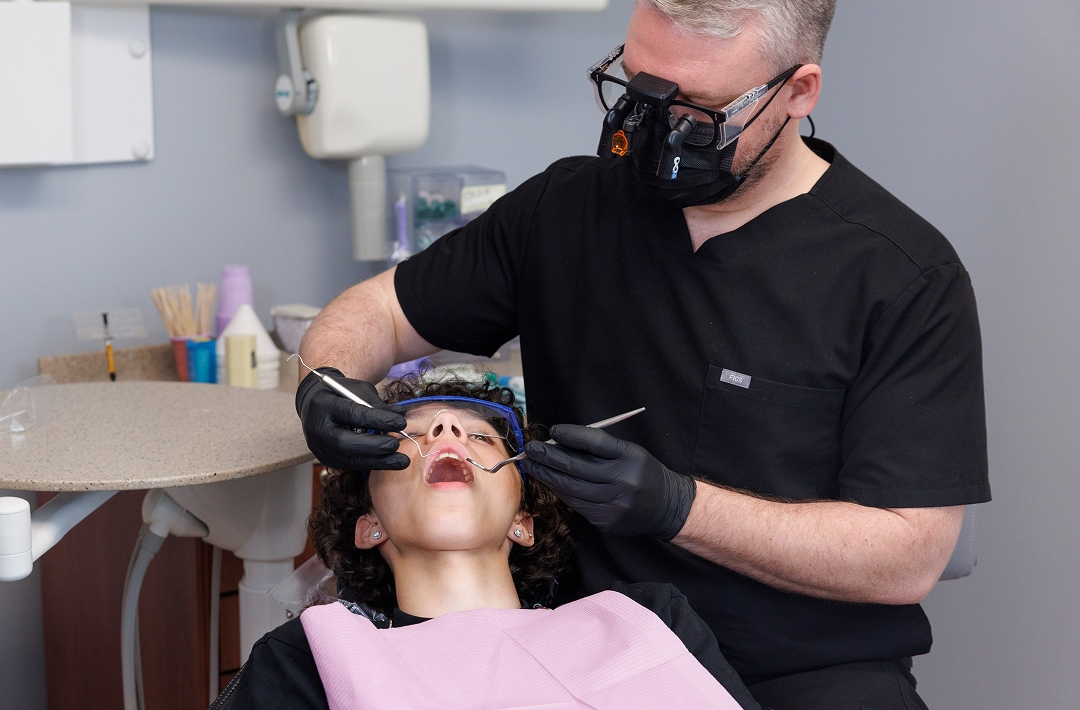
Sealants and fillings are not the same thing, and sealants are not a replacement for fillings.
A dental filling treats a tooth that already has decay. A sealant prevents decay from forming in the first place.
If a tooth already has a cavity, it needs a filling first. Once the tooth is restored and healthy, a sealant can sometimes be applied over it to protect the surrounding surface from future decay. Dr. Hinman will assess each tooth individually and recommend the right approach.
Dental sealants are covered by many dental insurance plans, especially for children. Coverage for adults varies by plan. If you don't have insurance, the cost of sealants is modest compared to the cost of treating a cavity. We also offer:
A: Not at all. The process is completely painless, requires no drilling or anesthetic, and takes just a few minutes per tooth. Most patients are surprised by how quick and easy it is.
A: Up to 10 years with proper care. Dr. Hinman checks your sealants at every routine exam and will let you know if any need to be reapplied.
A: No. Sealants are most commonly applied to children's permanent molars, but adults with healthy back teeth that have never had fillings or decay are also excellent candidates. If those surfaces are still cavity-free, a sealant helps keep them that way.
A: Generally, sealants are applied to teeth that don't already have fillings or decay. In some cases, a sealant can be applied to the healthy areas surrounding an existing filling to protect that surface. Dr. Hinman will assess each tooth individually.
A: No. Sealants protect the chewing surfaces of the back teeth, but the sides of your teeth and the gumline still need regular brushing and flossing. Sealants work best as part of a complete oral hygiene routine that includes regular professional cleanings.
A: Yes. Sealants have been used safely in dentistry for decades and are recommended by the American Dental Association. The material used is BPA-free and the amount applied is very small.
A: The cost per tooth is modest, especially compared to the cost of treating a cavity down the road. Our front desk will give you a clear cost breakdown before any treatment begins. If you don't have insurance, ask about our membership plan or financing options.