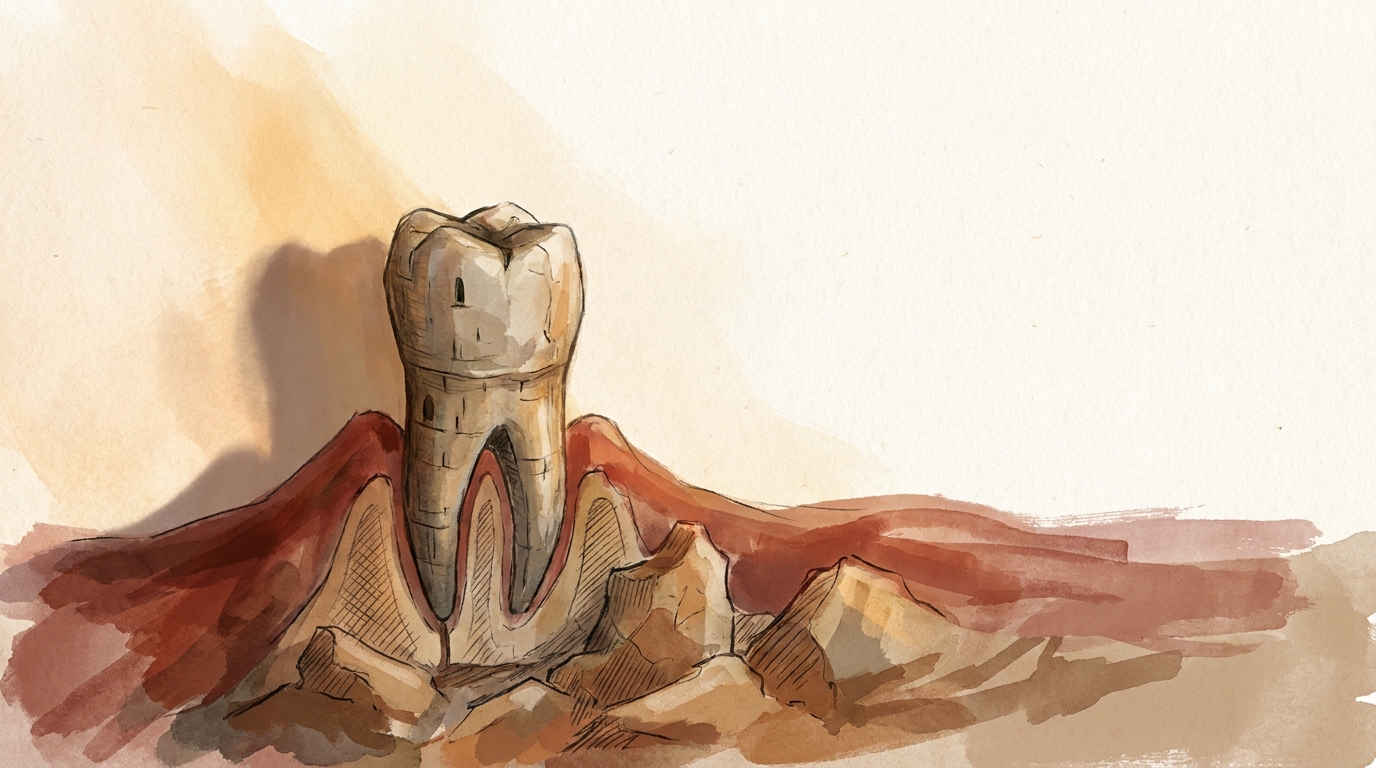
When gum disease goes untreated too long, it progresses from gingivitis — reversible gum inflammation — into periodontitis, which involves permanent bone loss around your teeth and, eventually, loose or lost teeth. According to the CDC, periodontitis is irreversible; professional treatment can slow and manage it, but it cannot be undone. The longer you wait, the less bone you keep.
That's the short answer. The rest of this guide explains what actually happens at each stage, how fast it moves, what it does to the rest of your body, and when Vineland, NJ patients should get it looked at.
Ignoring gum disease lets gingivitis — which is reversible — harden into periodontitis, which is not. Once periodontitis sets in, gums pull away from teeth, pockets deepen, and the bone and tissue holding your teeth in place break down. Teeth can loosen and need to be pulled out, according to CDC guidance.
The frustrating part is how quiet it is. The CDC notes that gum disease can often become serious before a person notices any symptoms. Many people only realize something is wrong when a tooth starts to feel loose, when gums bleed heavily, or when chewing becomes painful.
By then, the damage to the jawbone is already done. That's why the practical rule from the team at Vineland Dental is simple: catch it at the gingivitis stage, because that's the only stage you can fully reverse.
Gum disease progression varies by person, but the path is consistent: gingivitis first (reversible), then early periodontitis, then moderate-to-severe periodontitis with measurable bone loss. There is no fixed timeline, but risk factors like smoking, uncontrolled diabetes, and skipped cleanings can shorten the runway significantly — smokers have twice the risk of gum disease compared with nonsmokers, per CDC data.
About 4 in 10 U.S. adults aged 30 or older had some level of periodontitis in 2009–2014, according to CDC figures. That jumps to about 60 percent of adults 65 or older. In other words, waiting is how most people end up in the irreversible category.
Men are hit harder than women: roughly 1 in 2 men aged 30 or older had some level of periodontitis in that same CDC data, compared with about 1 in 3 women. If you're a middle-aged man in Vineland who hasn't been to a dentist in a few years, the odds are not in your favor.
Yes. Periodontitis is a leading cause of tooth loss, according to the CDC. When the supporting bone around a tooth is destroyed by chronic infection, the tooth loses its anchor — and once enough bone is gone, extraction becomes the only realistic option.
This is not a slow, dignified process. Teeth can shift, chewing surfaces change, and neighboring teeth often follow the first one out. Replacing those teeth — with bridges, partials, or implants — costs far more time and money than treating the gum disease would have.
Untreated gum disease is associated with several serious systemic conditions, though a definitive causal relationship has not been conclusively established in all cases. The CDC notes untreated periodontitis can make chronic conditions like diabetes worse. The American Academy of Periodontology adds that periodontal disease is often considered a complication of diabetes — and the relationship runs both ways, making blood sugar harder to control.
Research cited by the American Academy of Periodontology has also found that bacteria associated with periodontal disease can be aspirated into the lungs and contribute to respiratory diseases such as pneumonia. Separate studies referenced by the same group found men with gum disease were 49 percent more likely to develop kidney cancer, 54 percent more likely to develop pancreatic cancer, and 30 percent more likely to develop blood cancers.
These are associations, not guarantees. But they're the reason health professionals stopped treating gum disease as a strictly local problem a long time ago.
The warning signs the CDC lists — red or swollen gums, tender or bleeding gums, painful chewing, loose teeth, sensitive teeth, and gums that have pulled away from the teeth — are not all early signs. Several of them, like loose teeth and gum recession, mean the disease is already well past the reversible stage.
If a dentist has already diagnosed you, the clock is the enemy. Schedule a periodontal evaluation to measure your pocket depths and check for bone loss, then start whatever treatment is recommended — typically scaling and root planing (a deep cleaning below the gumline) for early-to-moderate cases, and more involved care for advanced cases.
Access matters. For Spanish-speaking patients in Vineland, Vineland Dental's team includes Spanish-speaking staff members Tania and Ashley, which removes a common barrier to getting care started. The practice also accepts most major insurance plans and offers Cherry and CareCredit financing, which helps spread the cost of periodontal treatment when it's not fully covered.
Vineland Dental provides routine cleanings and exams along with gum disease treatment, and treatment costs are communicated to patients before any work begins — no surprises mid-treatment. South Jersey's humid summers and the stretch of colder months when people put off checkups both tend to let untreated cases drift; getting on the schedule before another season passes is the single highest-value thing you can do.
It can, but it usually doesn't happen overnight. Gingivitis is a reversible condition, but if left untreated it can lead to periodontitis, according to the CDC. Risk factors like smoking, poorly controlled diabetes, and skipped professional cleanings speed up that transition. Smokers have twice the risk of gum disease compared with nonsmokers, so tobacco use is the single biggest accelerator for most people.
No, and this is a common misconception. Bleeding can stop for many reasons — including the disease progressing into deeper tissue where symptoms are less visible. The CDC notes gum disease can often become serious before a person notices symptoms. Only a professional periodontal exam, with measurements of pocket depth and attachment loss, can confirm whether the disease is active or controlled.
Not necessarily — but the risk is real. Periodontitis is a leading cause of tooth loss. Periodontitis is irreversible, but it can be slowed and managed with professional treatment, which is often enough to keep teeth stable for years or decades. The key variable is how early treatment starts and how consistently you keep up with maintenance cleanings.
Periodontal disease is often considered a complication of diabetes, and it may make blood sugar harder to control, per the American Academy of Periodontology. The CDC notes untreated periodontitis can worsen other chronic conditions, including diabetes. Associations with heart disease and respiratory conditions have been documented, though a definitive causal relationship has not been conclusively established for all systemic links.
Most adults do well with professional cleanings and exams twice a year, which is what Vineland Dental's in-house Clerri membership plan includes — 2 professional cleanings, 2 periodic exams, 1 emergency exam, dental radiographs, and an iTero scan with intraoral images. Patients with diagnosed periodontitis, smokers, and people with diabetes often need more frequent periodontal maintenance visits, sometimes every three to four months.
Routine periodontal cleanings and scaling and root planing are typically done with local numbing for comfort, and most patients tolerate them well. The practice uses modern diagnostic tools like iTero scans to plan treatment accurately, and no patient leaves without understanding exactly what is happening and why. Discomfort afterward is usually mild and short-lived compared with the alternative of untreated disease.
Gum disease doesn't get better on its own, and the window for a full reversal closes once bone loss starts. If you're in Vineland and you've been putting off a periodontal evaluation — or you've been told you have gum disease and haven't followed up — the next step is a straightforward exam, not a crisis.
Vineland Dental has been part of the Vineland community for over 26 years and provides gum disease treatment alongside routine care. Readers in Vineland, NJ who want this handled professionally can reach Vineland Dental at (856) 205-9500 or https://vinelanddental.com to get on the schedule.