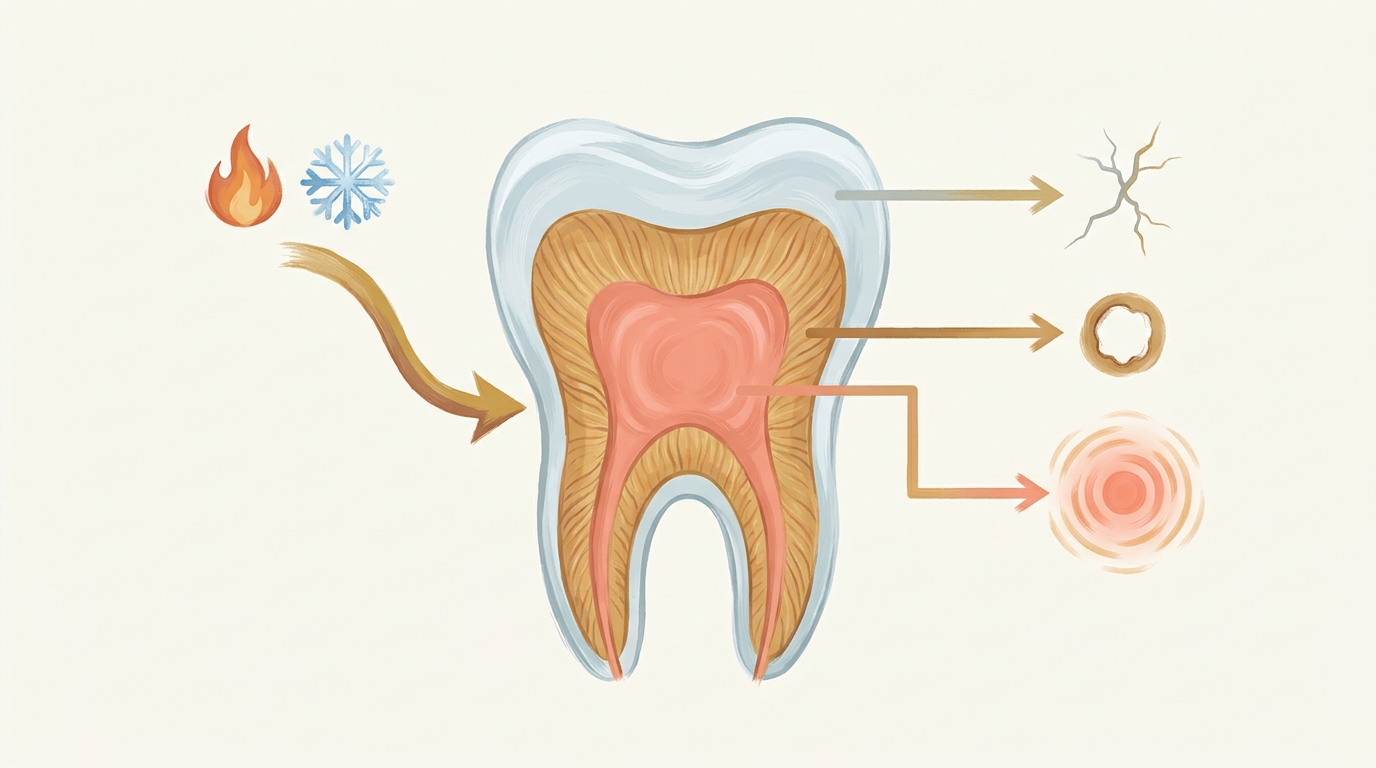
If a sip of iced tea or a spoonful of soup makes one tooth flinch, the short answer is this: sensitivity to hot and cold is a symptom, not a diagnosis. A quick twinge that fades in seconds is often just exposed dentin from worn enamel or receded gums. But if that same tooth reacts to both hot and cold for more than three or four days, it may be a sign of a cavity or an infected tooth pulp, and a dental exam is the only way to know.
This guide walks through what is actually happening inside the tooth, what the pattern of your pain tends to mean, and when a filling, a fluoride treatment, or a root canal becomes the right call for patients in Vineland, NJ.
Sensitivity happens because the hard outer enamel has worn down or the gums have pulled back, exposing the softer dentin underneath. Dentin contains microscopic tubules — tiny hollow canals — that let heat, cold, and sugar travel straight to the nerve inside the tooth. That is the zap you feel.
Enamel can wear from grinding, hard brushing, acidic foods, or simple age. Gums can recede from periodontal disease or aggressive flossing. Even repeated big temperature swings cause teeth to expand and contract, and over time microscopic cracks can form in the enamel that let hot or cold seep through to the nerves beneath.
Sometimes, but not always. The American Dental Association lists several causes of sensitivity, including tooth decay (cavities), fractured teeth, worn fillings, gum disease, worn enamel, and exposed tooth roots. Cavities cause pain and sensitivity as they grow, especially when the decay gets close to the nerve in the middle of the tooth. If the cavity reaches the nerve, it may cause an infection (abscess) that can spread in the body.
Cavities are also far more common than most people assume. So if you are a long-time Vineland resident wondering whether that cold-water twinge is "just a sensitive tooth" or something more, the odds genuinely justify a look.
The way your tooth reacts tells a story. A brief zing from cold that disappears the moment the cold is gone usually points to exposed dentin — the kind of thing a desensitizing toothpaste and a dental check can often address. Lingering pain, pain that wakes you up, pain to both hot and cold, or pain on biting is a different conversation.
A filling treats a cavity before it reaches the nerve; a root canal is for when the pulp inside the tooth is already infected or severely inflamed. If sensitivity is severe, persistent, and cannot be treated by other means, a dentist may recommend root canal treatment to eliminate the problem. The pattern above is the usual tiebreaker: short-lived sensitivity leans toward a filling; lingering heat pain or spontaneous throbbing leans toward a root canal.
Composite resin fillings bond directly to the tooth surface, which means less natural tooth structure needs to be removed compared with amalgam. Amalgam can also cause micro-fractures in teeth over time due to expansion and contraction with temperature changes — a relevant point if hot and cold are what triggered your symptoms in the first place. At Vineland Dental, a filling appointment is typically done in a single visit and takes between 45 minutes and 1 hour.
Yes, sometimes — and this is the part most people miss. Early-stage tooth decay starts by softening the hard outer enamel layer. At this early point, topical fluoride treatments like fluoride varnish and fluoride gel can help stop or even reverse early tooth decay, and generally need to be reapplied every 3 to 6 months. That is why fluoride treatments are a routine part of dental visits for patients of all ages.
This is exactly why early visits matter so much.
From Vineland Dental's routine cleanings & exams team: Following up on recommendations by the team. We can spot cavities when they are first forming and we can help stop them before we need to drill into your teeth. If you already have a cavity, making sure that we take care of it before it turns into something more like a root canal or a fractured tooth.
A sensitivity-focused exam at Vineland Dental starts with the story — which tooth, which temperatures, how long the pain lingers, whether biting hurts — followed by a visual check, targeted X-rays, and small tests like cold or tapping to isolate the tooth. The goal is to separate exposed dentin from decay, a cracked tooth, a failing filling, or pulp involvement, so the treatment matches the actual cause.
Vineland Dental's lead dentist, Dr. Walter Hinman, graduated from Temple University's dental school in 2017 and served as a US Army dentist from 2017 to 2021, including a nearly six-month deployment aboard the USNS Comfort in 2019. The practice has been part of the Vineland community for over 26 years, and the team includes Spanish-speaking staff members Tania and Ashley for patients along South State Street and the surrounding Cumberland County neighborhoods who prefer to discuss their care in Spanish. Vineland Dental states that no patient leaves without understanding exactly what is happening and why.
"I Went there for my first time, I liked the service very much and I’m planning to keep going there for my regular cleaning and other services." — 5★ · Oles, Aug 2026
Mild sensitivity to hot, cold, or pressure for one to two weeks after a cavity filling is usually normal, and deeper fillings may remain sensitive for a somewhat longer period. What is not normal: pain that worsens after the first 48 hours, sensitivity that lasts beyond three to four weeks without improvement, or sensitivity that does not improve may mean the bite needs a small adjustment. In any of those cases, call the office that placed the filling.
If a tooth is highly sensitive for more than three or four days and reacts to both hot and cold temperatures, it is time to visit a dentist. That pattern can be a sign of a cavity or infected tooth pulp, and waiting rarely makes it better. A quick, fading zing to cold that happens once in a while is less urgent, but still worth mentioning at your next cleaning.
No. Sensitivity can come from exposed dentin, gum recession, enamel wear, a worn filling, a cracked tooth, gum disease, or an exposed tooth root — not just cavities. Some causes are treated with desensitizing toothpaste, a fluoride treatment, a bite adjustment, or gum care. Only an exam can tell whether a filling is actually the right fix.
Yes, if the decay is caught early. When tooth decay has only softened the outer enamel, topical fluoride varnish or gel can help stop or even reverse it, and generally needs to be reapplied every 3 to 6 months. Topical fluoride treatments are a well-established tool for helping prevent cavities when decay is caught early. Once decay breaks through enamel into dentin, a filling is usually required.
Root canals are considered when the nerve inside the tooth is inflamed or infected. Warning signs include lingering pain after hot or cold, spontaneous throbbing, pain that wakes you at night, swelling, or a tooth that hurts to bite on. If sensitivity is severe and persistent and cannot be treated by other means, a dentist may recommend root canal treatment. Testing at the exam confirms it.
At Vineland Dental, a filling appointment is typically done in a single visit and takes between 45 minutes and 1 hour. That includes numbing, removing the decay, placing the composite material, and checking your bite. Deeper or multi-surface fillings may run slightly longer. You can usually eat once the numbness wears off, though mild sensitivity for a couple of weeks is normal.
In those cases, call the dental office that placed the filling.
A single cold zing is not an emergency. A tooth that reacts to both hot and cold for more than a few days is a message worth listening to — it is far cheaper and far more comfortable to treat early decay with a fluoride application or a small composite filling than to wait until the nerve is involved and a root canal is on the table. Readers in Vineland, NJ who want a professional look at a sensitive tooth can reach Vineland Dental at (856) 205-9500 or https://vinelanddental.com to schedule an exam.